
CASE STUDY: GOOGLE ADS AUDIT | JULIET DUNN
Juliet Dunn London is an independent British resortwear designer with a loyal following in the UK and USA — handcrafted kaftans, dresses and cover-ups for women who travel in style. The brand had been investing consistently in Google Ads. The results told a different story.

"Having a Google Ads audit by Nutshell has helped our business hugely. We were upping our ad spend constantly assuming we would get better results but not seeing improvements. Julie and Sophie highlighted fundamental set-up mistakes we never would have discovered alone and helped us spend our money in a more concentrated, specific way to make sure our ads were generating sales, not just views. They also ensured we had clear and accurate conversion figures so we know exactly where our spend is going."
Michelle Lewis, Head of Sales, Juliet Dunn
THE CHALLENGE
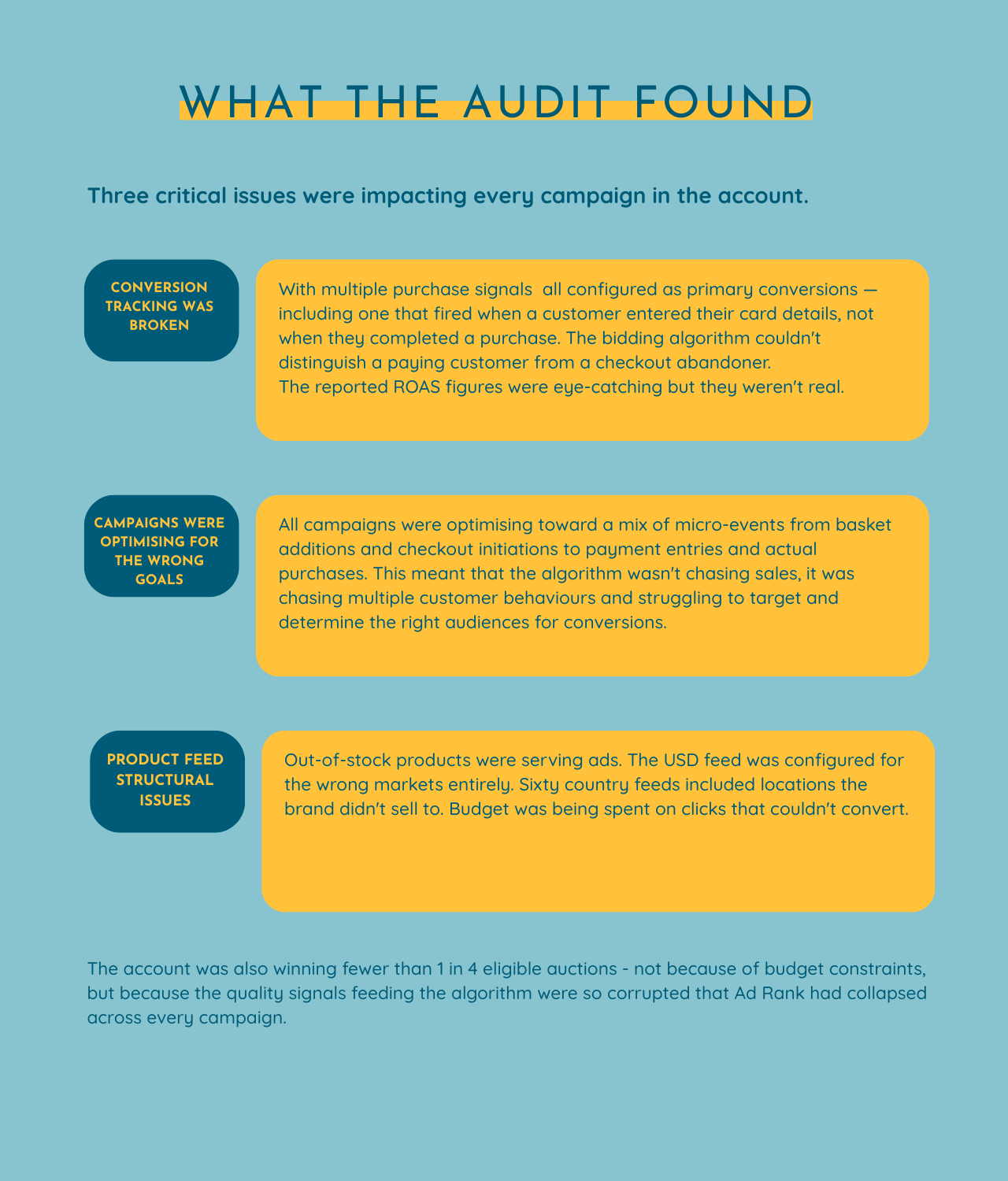
Juliet Dunn came to us to investigate the effectiveness of their Google Ads set up. Ads were active and the budget was healthy but there was uncertainty in results which didn’t tally with the picture on Shopify. On paper, the account looked active. In reality, the data it was reporting was unreliable, and every decision being made on the back of it was compounding the problem.
When the team came to us for a Google Ads audit, we found what we often find in accounts that have been self-managed or under-reviewed: not one problem, but several - quietly working against each other.
WHAT WE DID
The audit gave Juliet Dunn a clear, prioritised picture of what was broken and why. Because the problems were structural rather than cosmetic, the recommendation was to bolt on a setup phase - fixing the foundations before making any bid or budget changes that would otherwise be built on sand.
Over the following weeks we:
Established clean, single-source conversion tracking via the Shopify API - for the first time, the account had a reliable signal of actual purchases with accurate revenue values
Demoted all micro-conversion events to secondary status, removing them from bidding decisions entirely
Resolved the Merchant Center feed issues - disabling auto-crawl, correcting market configurations, and excluding out-of-stock products from serving
Disabled all auto-apply account settings that had been allowing Google to make autonomous changes to a structurally compromised account
Began rebuilding campaign architecture to separate UK and USA markets, protect brand terms, and eliminate wasted spend on competitor and irrelevant search queries
THE RESULTS
With clean data flowing and the account architecture rebuilt, the numbers shifted quickly.
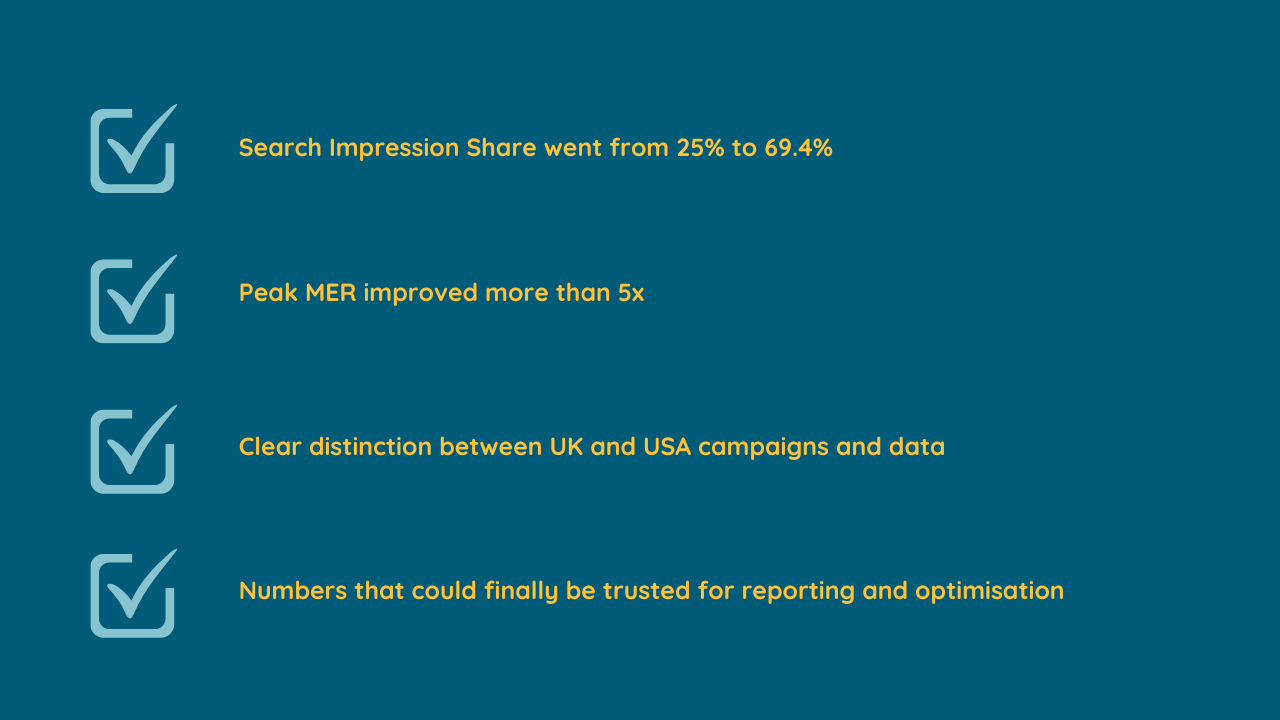
With effective conversion tracking and a managed product catalogue feed the numbers could now be trusted and Juliet Dunn had clarity on the campaigns that were generating sales. A data exclusion helped to clear previous data contamination and help the system learn from a fresh start. As the bidding algorithm could then also train on real purchase data, it began to allocate budget to the moments and audiences most likely to buy, making the spend more efficient.
WHAT THIS CASE STUDY IS REALLY ABOUT
This isn't a story about ads that didn't work. It's a story about an account that was actively working against itself, and what's possible when you fix the things you don't even know are broken.
The scaling potential (PMax campaigns with audience signals, video creative, occasion-led search structure), was always there. It just needed solid foundations underneath it first.
An audit costs less than a week of ad spend. The clarity it gives you is worth considerably more.
If you're spending on ads and not sure whether your numbers are telling you the truth - that's exactly where we start.